

Understanding why pipeline coatings fail is as important as knowing how to apply them correctly. Root cause analysis (RCA) of coating failures provides invaluable data that drives continuous improvement in specification, application, and quality control processes. This article examines the most common failure modes and the evidence-based strategies to prevent them.
The Most Common Coating Failure Modes
1. Adhesion Failure
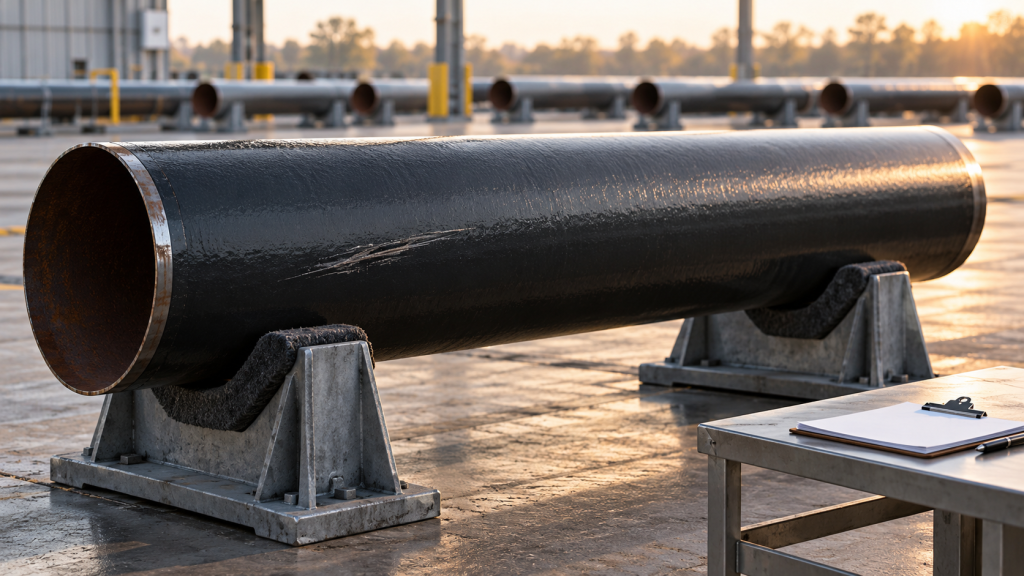
Adhesion failure — either at the coating-substrate interface (adhesive failure) or within the coating itself (cohesive failure) — is the most prevalent failure mode. Primary causes include inadequate surface preparation, surface contamination, application below dew point, or use of an incompatible primer. Peel adhesion tests per ASTM D4541 are the standard diagnostic tool.
2. Holiday Formation
Holidays — discontinuities in the coating film — create focal points for corrosion. They can form during application from spray distance variations, equipment malfunctions, or contamination events. High-voltage holiday detection (spark testing) per NACE SP0188 is mandatory for all buried and submerged pipeline coatings before backfill.
3. Cathodic Disbondment
When a coating has a holiday and cathodic protection is active, the alkaline environment generated at the metal surface can cause the coating to lift from the substrate — a phenomenon known as cathodic disbondment (CD). Polyurea systems with optimal adhesion characteristics show dramatically lower CD rates compared to traditional epoxy coatings under equivalent CP conditions.
Field Investigation Techniques
Effective failure investigation combines visual inspection, holiday detection surveys, adhesion testing, thickness measurements, and laboratory analysis of coating samples. NACE TM0215 provides standardized procedures for coating condition assessment during pipeline excavations. Our technical library includes failure investigation report templates used by our member organizations.
Join our Pipeline Integrity Working Group to participate in collaborative failure analysis programs and access anonymized failure data from across the industry.