well pad containment

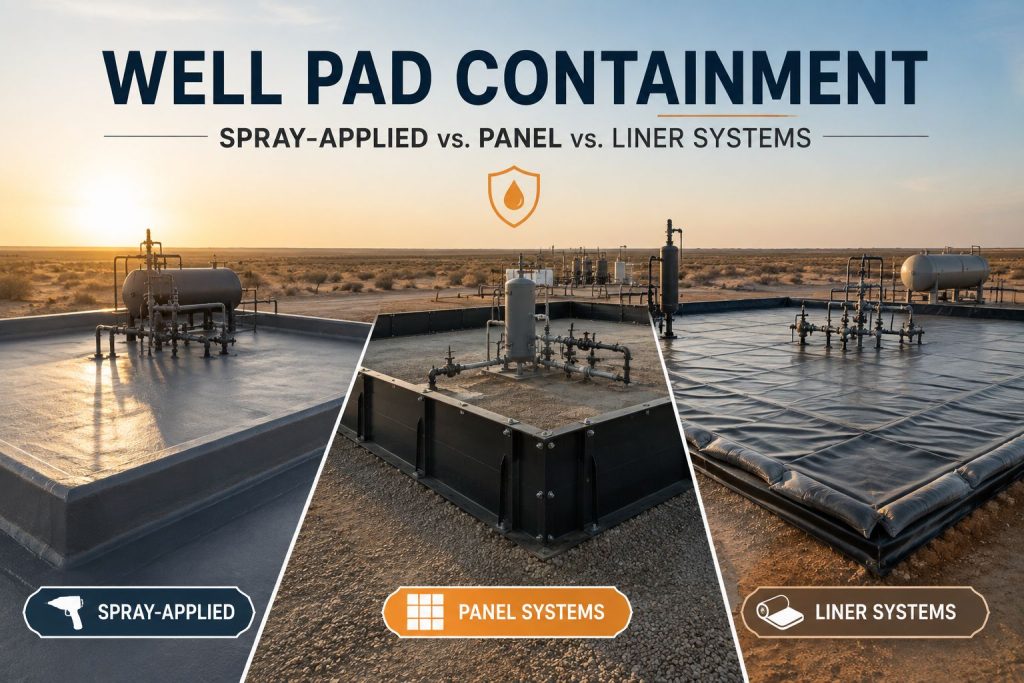
Well Pad Containment: Spray-Applied vs. Panel and Liner Systems

Well pad containment exists to keep a spill where it happens instead of letting it migrate into surrounding soil or groundwater, and the system chosen to do that job has real consequences for both regulatory compliance and long-term site risk. Operators generally choose between three broad approaches: spray-applied liner systems, prefabricated panel systems, and sheet liner systems built from HDPE or similar geomembrane material. Each one handles the same basic job differently, with real tradeoffs in installation speed, seam integrity, mobility, and cost. This guide breaks down how each system works, where it tends to perform best, and what to weigh before specifying one for a given site.

Understanding the Basics

Well pad containment typically covers the area around wellheads, tank batteries, separators, and other equipment where a leak or spill could otherwise reach bare soil. The containment system’s job is to hold that liquid within a defined area, whether through a lined berm, a sealed pad surface, or a combination of both, until it can be recovered or properly managed.

Spray-applied systems, most commonly polyurea, are applied directly to a prepared pad surface or berm structure as a liquid that cures into a seamless, continuous membrane. Because the coating is sprayed rather than pieced together, it conforms to irregular grading, corners, and penetrations without the seams that other systems require.

Panel systems use prefabricated, often modular sections, typically fiberglass or coated steel, that interlock or bolt together on site to form a containment perimeter. They are designed to be assembled and disassembled relatively quickly, which makes them a common choice for temporary or relocatable containment needs.

Liner systems use large sheets of HDPE or other geomembrane material, field-seamed together and anchored or ballasted in place to cover the pad area. This is one of the most widely used approaches across the industry, largely because of its lower material cost relative to the surface area it covers.

Well Pad Containment: Key Differences Between the Three System Types

Seams and failure points. Spray-applied containment cures as a continuous, seamless membrane, which removes the seam-related failure points that panel and liner systems have to manage carefully. Panel systems rely on interlocking joints or gaskets between sections. Liner systems depend on field-welded or taped seams between sheets, and seam quality is one of the most common sources of liner failure when installation isn’t done carefully.

Conformity to terrain. Spray-applied systems conform closely to irregular grading, slopes, and penetrations around equipment, since the material is applied directly to the prepared surface. Panel and liner systems generally work best on flatter, more uniform pad areas, and irregular terrain can complicate installation and increase the risk of gaps or improper fit.

Installation speed. Panel systems are often the fastest to assemble and disassemble, which is part of why they’re common on temporary drilling-phase sites. Spray-applied systems can also move quickly once the substrate is properly prepped, with cure times that allow a fast return to service. Liner installation speed depends heavily on pad size and the number of field seams required.

Mobility and reuse. Panel systems are generally the most relocatable option, designed to be broken down and moved to another pad. Liner systems can sometimes be lifted and reused if undamaged, though this depends on the specific material and how it was anchored. Spray-applied systems are a permanent, bonded installation and are not designed to be relocated.

Puncture and mechanical damage resistance. Liner systems, particularly thinner geomembrane sheets, are more vulnerable to punctures from underlying rock, sharp debris, or equipment traffic unless properly protected with a cushioning layer. Spray-applied coatings bonded to a properly prepared substrate generally hold up better against point loading and minor mechanical impact.

Maintenance and inspection. Seamless spray-applied systems are generally easier to inspect visually since there are no seam lines to check individually. Panel and liner systems require more attention to joints, seams, and anchor points during routine inspection.

Cost. Liner systems typically carry the lowest material cost per square foot for large flat areas. Panel systems and spray-applied systems generally cost more upfront, though the right comparison depends on installation labor, site conditions, and whether the containment is intended as permanent or temporary.

Comparison Table

FactorSpray-AppliedPanel SystemsLiner Systems
SeamsNone, continuous membraneInterlocking jointsField-welded or taped seams
Terrain conformityHigh, follows grading and penetrationsBest on flat, uniform areasBest on flat, uniform areas
Installation speedFast once substrate is preppedGenerally fastest to assembleDepends on pad size and seam count
MobilityPermanent, not relocatableHighly relocatableSometimes reusable if undamaged
Puncture resistanceStrong when properly bondedModerate, depends on panel materialMore vulnerable without cushioning
Typical usePermanent installations, irregular gradingTemporary or drilling-phase sitesLarge flat pad areas, budget-driven projects
Typical costHigherModerate to higherGenerally lowest per square foot

Best Use Cases

Spray-applied containment tends to make the most sense for permanent well pad installations, sites with irregular grading or numerous equipment penetrations, and situations where long-term seam integrity is a priority. Because it conforms directly to the prepared surface, it also reduces the risk of gaps that can develop around complex equipment layouts. For more on how spray-applied polyurea performs in pipeline-adjacent applications, our guide on why polyurea has become the go-to pipeline coating covers the underlying chemistry and performance considerations in more detail.

Panel systems fit well on temporary or drilling-phase sites where the containment needs to be assembled quickly, potentially disassembled, and moved to the next location as operations progress. Their modularity is the main advantage here, at some cost to long-term seam durability compared with a bonded system.

Liner systems remain a common, cost-effective choice for large, relatively flat pad areas where budget is a primary constraint and the site doesn’t present significant terrain or penetration challenges. For a closer look at how liner materials compare on broader technical grounds, our HDPE versus polyurea coating comparison walks through the tradeoffs in more depth.

Things to Consider Before Choosing

Confirm the regulatory containment volume requirement first. Federal and state secondary containment requirements, including relevant SPCC and state E&P regulations, typically specify a minimum containment volume based on tank or equipment capacity. Whatever system is chosen needs to meet that volume requirement, not just cover the ground area.

Assess the pad’s terrain and equipment layout. A pad with significant grading, multiple penetrations, or an irregular footprint favors a system that can conform to that complexity without relying on multiple seams or field-cut sections.

Factor in whether the containment is permanent or temporary. A site expected to operate for years favors a durable, low-maintenance system. A drilling-phase site with a short operational window may be better served by a relocatable panel system that doesn’t require the same long-term investment.

Plan for surface preparation regardless of system type. Spray-applied coatings depend heavily on proper substrate prep. Liner systems need a stable, debris-free base and often a cushioning layer to prevent punctures. Neither system performs to its potential over an inadequately prepared pad surface. Surface prep failures are the leading cause of coating problems across pipeline and containment applications alike, which our guide on pipeline surface preparation covers in more detail, even though it’s written primarily for linear pipeline projects rather than pad containment specifically.

Ask about seam quality control on any liner or panel installation. If a liner or panel system is selected, ask how seam welds or joints are tested, whether that’s vacuum box testing, air lance, or another method, since seam integrity is where most containment failures in these systems originate.

Common Mistakes in Well Pad Containment Installation

Underestimating the required containment volume. Sizing a system to the visible footprint of the tanks rather than the actual regulatory volume requirement is a common shortfall. The containment area and depth both factor into whether the system actually meets the applicable standard, not just the ground area it covers.

Skipping subgrade preparation to save time. Whether the system is spray-applied, paneled, or lined, an inadequately compacted or debris-strewn subgrade undermines the installation from the start. Rushing this step to get equipment operational faster tends to show up later as premature failures.

Treating penetrations as an afterthought. Wellheads, piping, and equipment stands that penetrate the containment area are common weak points if they aren’t properly detailed during installation. This is one area where seamless spray-applied systems have a real advantage, since there’s no seam to manage around an irregular penetration.

Underestimating wind and weather exposure for liner systems. Liner systems that aren’t properly anchored or ballasted can shift or billow in high wind, which stresses seams and anchor points over time. Site-specific wind exposure should factor into the anchoring plan, not just a generic installation standard.

Deferring inspection until a problem is visible. By the time a containment failure is visible at the surface, contamination may have already occurred. A routine inspection schedule, rather than a reactive one, catches most issues while they’re still a minor repair.

Coverage and Planning

For spray-applied systems, coverage follows the standard film-build math: one gallon spread at one mil thickness covers 1,604 square feet. Actual material requirements depend on the specified dry film thickness for the containment application, which should be based on the manufacturer’s technical data sheet and the containment volume and durability requirements for the specific site, not a generic assumption.

Maintenance

All three system types benefit from a routine inspection schedule, though what gets inspected differs. Spray-applied systems should be checked for UV-related surface wear, mechanical damage from equipment traffic, and any signs of substrate movement telegraphing through the coating. Panel systems need joint and gasket inspection to confirm seals remain intact after assembly, disassembly, or relocation. Liner systems require seam inspection along with checks for punctures, UV degradation on exposed material, and anchor or ballast integrity, particularly after high wind events. Any damage identified during inspection should be addressed promptly, since a small breach in any of these systems defeats the purpose of the containment.

Frequently Asked Questions

Which well pad containment system lasts the longest? 

This depends on the specific product, installation quality, and site conditions rather than the category alone. A well-installed spray-applied system and a well-installed liner system can both perform for years, while a poorly installed version of either can fail early.

Can panel systems be reused on multiple well pads? 

Often, yes, which is one of their main advantages for operators running multiple temporary sites. Condition should be assessed before each redeployment to confirm joints and panels haven’t been damaged.

Do liner systems need a cushioning layer underneath? 

In many cases, yes, particularly on pads with rocky or uneven subgrade, to reduce the risk of puncture from underlying material.

Is spray-applied containment more expensive than a liner system? 

Generally, yes, on a material cost basis, though the comparison should account for installation labor, expected service life, and maintenance needs rather than material cost alone.

How is the required containment volume determined? 

It’s generally based on the capacity of the tanks or equipment being contained, per applicable federal and state secondary containment regulations. This should be confirmed with the specific regulatory requirements that apply to the site before selecting a system.

Conclusion

Spray-applied, panel, and liner systems all serve the same core purpose on a well pad, but they get there differently, and the right choice depends on the pad’s terrain, whether the containment is permanent or temporary, budget, and the regulatory volume requirement that has to be met. Seamless spray-applied systems tend to suit complex, permanent sites best. Panel systems fit temporary, relocatable operations. Liner systems remain a practical, cost-effective option for large, flat pads. Matching the system to the site’s actual conditions, rather than defaulting to whichever option is most familiar, is what determines whether the containment holds up when it’s actually needed.

Read More
frac tank coating

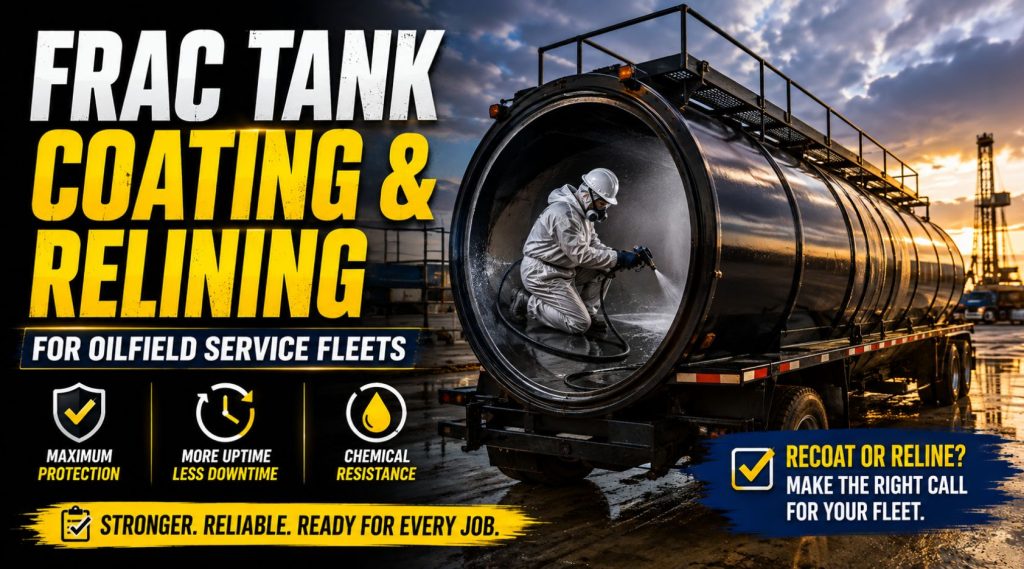
Frac Tank Coating and Relining for Oilfield Service Fleets

A frac tank earns its keep by moving between sites, holding whatever fluid the job requires, and getting back on the road. That work cycle is hard on a coating in a way stationary infrastructure isn’t. Constant fluid exposure, frequent cleanout, road vibration, and weather extremes all wear on a tank’s interior and exterior finish faster than most fleet operators expect.

This guide looks at what actually drives frac tank coating decisions, when a recoat is enough versus when a full reline is the better call, and what to weigh when specifying protection for a fleet that needs to stay in rotation rather than sit idle for a lengthy rehab job.

Understanding the Basics

Frac tanks used in oilfield service see a wider range of chemical exposure than most fixed storage vessels, since the same tank might hold produced water, fracturing fluid, acid, or fresh water depending on the job. That variability is the starting point for any coating decision, since a coating suited to one fluid type may perform poorly against another.

Two separate surfaces need consideration: the interior, which sees direct fluid contact and needs chemical resistance above almost everything else, and the exterior, which faces road wear, UV exposure, and the general abuse of being hauled between sites. Treating both as the same coating decision is a common mistake. They often call for different specifications.

Why Frac Tanks Wear Faster Than Fixed Tanks

A stationary storage tank might see one fluid type for years. A frac tank in active fleet rotation can cycle through multiple fluid types in a single month, with cleanout and re-fill happening on a tight turnaround between jobs. That cycling stresses a coating in ways a single-exposure application doesn’t, since chemical compatibility, thermal cycling, and mechanical wear from cleanout procedures all compound over a shorter timeframe.

Road transport adds another layer of stress that fixed tanks don’t face at all. Vibration, minor impacts, and repeated loading and unloading all contribute to coating wear on the exterior and at structural stress points, which is part of why fleet-use tanks often need more frequent inspection than their fixed counterparts.

Recoat vs. Reline: What’s the Difference

These two terms get used loosely in the field, but they describe different scopes of work.

A recoat typically means addressing surface-level wear, applying a fresh coating layer over a substrate that’s still structurally sound and doesn’t have significant coating failure or exposed metal beyond isolated spots. It’s a faster, lower-cost intervention aimed at extending the life of an otherwise serviceable tank.

A reline is a more complete process, usually involving full removal of the failing coating, inspection and repair of the underlying substrate, and application of a new coating system from bare or properly prepared metal. Relining is called for when coating failure is widespread, when there’s evidence of underlying corrosion, or when a tank is being repurposed for a fluid type its original coating wasn’t rated for.

Choosing between the two starts with an honest inspection rather than a default toward the cheaper option. A recoat applied over a substrate with hidden corrosion or extensive delamination often fails faster than expected, turning a cost-saving move into a repeat expense.

Chemical Compatibility Considerations

Because frac tanks in fleet service may hold different fluids across their working life, chemical compatibility deserves more attention than it typically gets in a routine recoat decision. A coating rated for produced water exposure may not hold up the same way against acid or certain fracturing fluid additives, and assuming a coating that performed well historically will continue to perform well under a new fluid type is a common and costly mistake.

Reviewing what the tank has been used for, and what it’s likely to be used for going forward, before specifying a coating or relining system is a basic step that gets skipped more often than it should, usually under schedule pressure.

Fleet Logistics and Downtime

Unlike fixed infrastructure, a frac tank sitting out of rotation for coating work is a tank not earning revenue. This makes turnaround time a real factor in the coating decision, not just a nice-to-have. Faster-curing coating systems can reduce the number of days a tank sits out of service, which matters more to a fleet operator managing dozens of tanks than it might to an owner of a single fixed asset.

Scheduling coating work in batches, rather than pulling tanks one at a time as problems surface, is a common way fleet operators reduce the cumulative downtime cost of maintaining a coating program across an entire fleet.

Recoat vs. Reline Comparison

FactorRecoatReline
ScopeSurface-level coating renewalFull coating removal and substrate repair
Best forTanks with isolated wear, no major corrosionTanks with widespread failure or corrosion
DowntimeShorterLonger
CostLower upfrontHigher upfront
Long-term riskHigher if underlying issues are missedLower, since substrate is fully inspected
Fluid compatibility checkRecommended before proceedingEssential, especially if service use is changing

Things to Consider Before Coating or Relining a Frac Tank

  1. What fluid types has this tank held, and what will it likely hold going forward?
  2. Is the existing coating failure isolated, or does inspection suggest wider substrate damage?
  3. How much downtime can the fleet actually absorb for this tank right now?
  4. Does the coating or relining contractor have documented experience with oilfield service fleet tanks specifically, not just fixed storage vessels?
  5. What’s the inspection and maintenance plan after the work is done, so problems get caught early rather than during the next fluid changeover?

Surface preparation quality matters as much here as it does on any other pipeline or tank coating project. Our guide on properly preparing a surface before coating covers the standards that apply broadly across oilfield coating work, not just pipelines.

Maintenance and Inspection

A fleet-use frac tank benefits from a more frequent inspection schedule than a fixed tank, given the wear pattern described above. Checking the interior after cleanout, before refilling with a new fluid type, is one of the more effective habits a fleet operator can build into a maintenance routine, since it catches coating wear before it becomes a bigger problem. Exterior inspection after transport, particularly around structural connection points and areas prone to impact, is worth the same regular attention.

Understanding why coatings fail in the first place helps prioritize what to inspect for. Our root cause analysis of pipeline and tank coating failures breaks down the most common failure patterns, most of which trace back to surface preparation or chemical incompatibility rather than the coating material itself.

Frequently Asked Questions

How often should a frac tank be recoated?

There’s no fixed universal interval. It depends on fluid exposure history, cycling frequency, and inspection findings rather than a calendar schedule alone. Regular inspection is more reliable than assuming a fixed timeframe.

Can one coating system handle every fluid a frac tank might carry?

Not necessarily. Chemical compatibility varies by coating formulation, and a tank that regularly changes service fluids needs a coating specified with that variability in mind rather than for a single fluid type.

Is relining always more expensive than recoating?

Upfront, yes, since it involves more labor and material. But a recoat applied over hidden substrate damage can lead to earlier failure and repeat costs, so total cost of ownership sometimes favors relining even when the initial price is higher.

What coating types are typically used for frac tank interiors and exteriors?

Several coating categories see use in this application, including various spray-applied systems, chosen based on the fluid exposure and service conditions. For a broader look at how different coating systems compare, see our comparison of pipeline coating types.

Does exterior coating matter as much as interior lining for a frac tank?

Both matter, but for different reasons. Interior coating deals with chemical exposure directly. Exterior coating protects against road wear, weather, and corrosion from ongoing transport and handling, and neglecting it can eventually compromise the structure supporting the interior lining.

Conclusion

Frac tanks in oilfield fleet service face a wear pattern that fixed storage tanks simply don’t, and treating them the same way for coating and maintenance planning tends to lead to premature failures and unplanned downtime. Deciding between a recoat and a full reline comes down to an honest substrate inspection, a clear picture of past and future fluid exposure, and how much downtime the fleet can realistically absorb. Building a regular inspection habit into the fleet’s operating routine remains the most reliable way to catch coating problems while a simple recoat is still an option, rather than after the situation has escalated to a full reline.

Read More
Pipeline Coating System

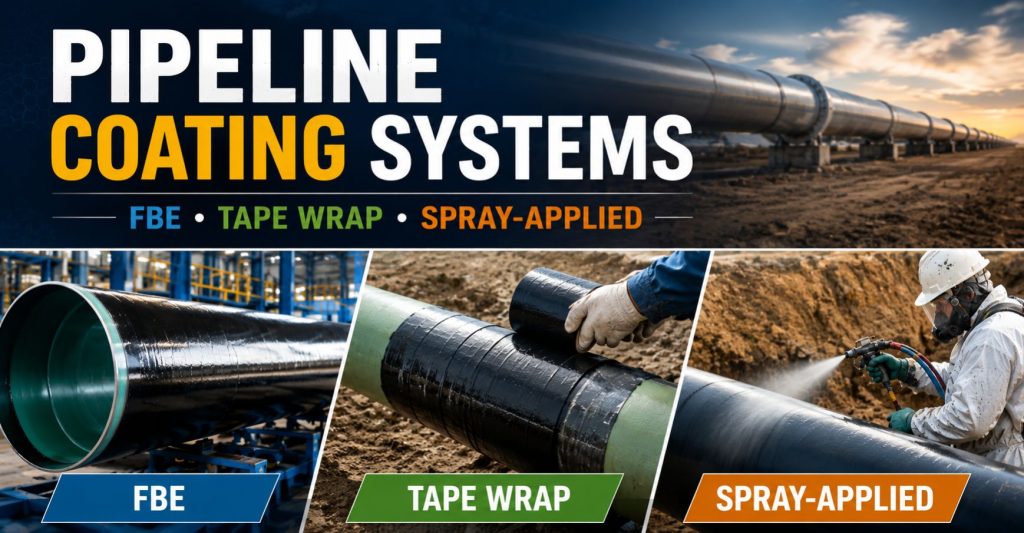
Pipeline Coating Systems Compared: FBE, Tape, and Spray-Applied

Choosing a pipeline coating system usually comes down to three broad categories: fusion bonded epoxy, tape wrap systems, and spray-applied coatings. Each has a long track record in the industry, and each fits a different mix of project conditions, from mainline new construction to field joint repair to rehabilitation work on aging infrastructure.

This guide compares the three at a practical level, covering how each is applied, where it tends to perform well, and what tradeoffs come with it, so the choice can be based on project conditions rather than whichever option a given contractor happens to default to.

Pipeline Coating Systems Compared: Understanding the Basics 

All three coating categories exist to do the same core job: create a barrier between the pipe’s steel surface and the surrounding soil, water, or atmosphere, reducing corrosion risk and extending service life. How they achieve that barrier, and where in the pipeline lifecycle they’re typically applied, is what separates them.

Fusion bonded epoxy (FBE) is a factory-applied, heat-cured thin-film coating, most commonly used on new mainline pipe before it ever reaches the field. Tape wrap systems, whether cold-applied or hot-applied, are mechanically wrapped around the pipe, often used for field joints, older infrastructure, and situations where factory coating isn’t practical. Spray-applied coatings, a category that includes various epoxy, polyurethane, and polyurea-type systems, are applied wet in the field or in a controlled setting, curing into a bonded film.

Fusion Bonded Epoxy (FBE)

FBE has been a mainstay of new pipeline construction for decades, largely because it’s applied under controlled factory conditions rather than in the field, which supports consistent quality control. The pipe is heated, and epoxy powder is applied and cured onto the surface, producing a relatively thin, hard film.

FBE performs well as a primary barrier coating on buried mainline pipe, but it has known limitations. It’s more brittle than a flexible coating and can be more vulnerable to mechanical damage during transport, handling, and installation, particularly at bends, dents, or gouges. It’s also not typically suited to UV exposure over long periods, which is part of why FBE-coated sections are usually buried or otherwise shielded rather than left exposed above grade for extended periods.

Tape Wrap Systems

Tape wrap coatings, whether cold-applied petrolatum or wax-based tapes or hot-applied systems, have a long history in pipeline protection, especially for field joints where factory-applied coatings can’t reach and for older pipeline systems that predate widespread FBE adoption. Application involves wrapping the tape around the pipe surface, typically with an inner primer layer and an outer mechanical protection layer.

Tape systems are valued for field-friendliness. They don’t require the equipment or cure time that spray-applied systems do, which makes them practical for remote locations or smaller repair jobs. The tradeoff is a greater long-term risk of disbondment or tenting, where the tape separates from the pipe surface over time, particularly under soil stress or with inconsistent original application. Inspection and maintenance planning tend to matter more with tape systems than with a bonded coating.

Spray-Applied Coatings

Spray-applied systems cover a range of chemistries, but they share a common advantage: they can be applied directly onto a prepared surface in the field, at a repair site, or in a controlled shop setting, curing into a continuous, bonded film without the seams or overlap points that tape systems have.

This category is commonly used for field joint coating, connecting the factory-coated sections of pipe once they’re welded together in the field, as well as for rehabilitation of existing pipeline sections and for high-impact or high-abrasion areas where a flexible coating is preferred over a more rigid one. Spray-applied systems generally offer good flexibility and can accommodate a wider range of surface conditions than factory-only options, though surface preparation quality has an outsized effect on how well any spray-applied coating actually performs.

Comparison Table

SystemApplication MethodTypical UseKey AdvantageKey Limitation
Fusion Bonded Epoxy (FBE)Factory-applied, heat-curedNew mainline constructionConsistent factory quality controlMore brittle, vulnerable to mechanical damage
Tape Wrap (cold or hot-applied)Field-wrapped mechanicallyField joints, older infrastructure, remote repairsNo specialized equipment or cure time neededHigher long-term disbondment risk if not properly applied
Spray-Applied (epoxy, polyurethane, polyurea-type)Field or shop-applied, sprayed and curedField joints, rehab, high-impact areasSeamless, bonded, generally flexiblePerformance depends heavily on surface prep quality

Which System Fits Which Job

FBE tends to fit:

  • New mainline pipe manufactured and coated under factory conditions
  • Projects prioritizing consistent, quality-controlled coating application
  • Buried service where UV exposure isn’t a factor

Tape wrap tends to fit:

  • Field joint protection where factory coating can’t reach
  • Remote sites without access to spray equipment
  • Repair or rehabilitation of older systems already using tape-based protection

Spray-applied systems tend to fit:

  • Field joints connecting factory-coated pipe sections
  • Rehabilitation projects on aging or damaged pipeline
  • High-impact, high-abrasion, or ground-movement-prone areas where flexibility matters

For a closer look at how spray-applied systems compare specifically against another common option, see our comparison of HDPE versus polyurea pipeline coatings.

Things to Consider Before Choosing a System

  1. Is this new mainline construction, a field joint, or a rehabilitation project? Each scenario tends to favor a different coating category.
  2. What’s the realistic surface preparation standard achievable on this job, since that affects spray-applied and tape performance more than FBE?
  3. What’s the soil condition and expected mechanical stress at the coating location?
  4. Does the project need to meet a specific regulatory or client specification that names a particular coating category?
  5. What inspection and maintenance access will be available after installation, particularly relevant for tape systems?

Surface preparation deserves particular attention regardless of which system is chosen, since a large share of coating failures across all three categories trace back to inadequate prep rather than the coating material itself. Our guide on properly preparing a pipeline surface before coating covers the standards and practical steps involved.

Maintenance and Long-Term Performance

Each coating category has a different maintenance profile. FBE, once properly applied and buried, generally requires little ongoing attention barring mechanical damage or excavation-related exposure. Tape systems benefit from periodic inspection where accessible, since disbondment can develop gradually and isn’t always visible from the surface. Spray-applied coatings hold up well over time when application and surface prep were done correctly, with most long-term issues tracing back to installation quality rather than the coating chemistry itself.

Regardless of coating type, corrosion risk doesn’t disappear the moment a coating is applied. Our broader guide on pipeline corrosion prevention covers how coating selection fits into a full corrosion management strategy alongside cathodic protection and inspection practices.

Frequently Asked Questions

Which pipeline coating type is most commonly used?

FBE has historically been the dominant choice for new mainline construction due to its factory-controlled application process, while tape wrap and spray-applied systems see heavy use for field joints, repairs, and rehabilitation work.

Can different coating types be used on the same pipeline?

Yes, and it’s common. A pipeline might use FBE on the mainline sections and a spray-applied or tape system at field joints, since those joints can’t be factory-coated before installation.

Which coating type holds up best against mechanical damage?

Flexible spray-applied systems generally offer better resistance to impact and ground movement than more rigid coatings like FBE, though actual performance depends on the specific formulation and application quality.

Do all these coating types require the same surface preparation?

No. Requirements vary by system and by the applicable industry standard for the project, but inadequate surface preparation is a leading cause of coating failure across every category, so it shouldn’t be treated as a minor step regardless of which coating is chosen.

How do regulators view these different coating types?

Pipeline coating selection generally needs to align with applicable federal and industry standards for the specific project and jurisdiction. Confirming current requirements with the relevant regulatory body before specifying a coating system is standard practice.

Conclusion

FBE, tape wrap, and spray-applied coatings each solve the same underlying problem in different ways, and the right choice depends heavily on where in a pipeline’s lifecycle the coating is being applied and what conditions it needs to withstand. New mainline construction, field joints, and rehabilitation work each tend to favor a different system, and in many real projects, more than one coating type ends up working together across the same pipeline. Surface preparation quality remains the common thread that determines whether any of these systems performs as expected over the long term.

Read More