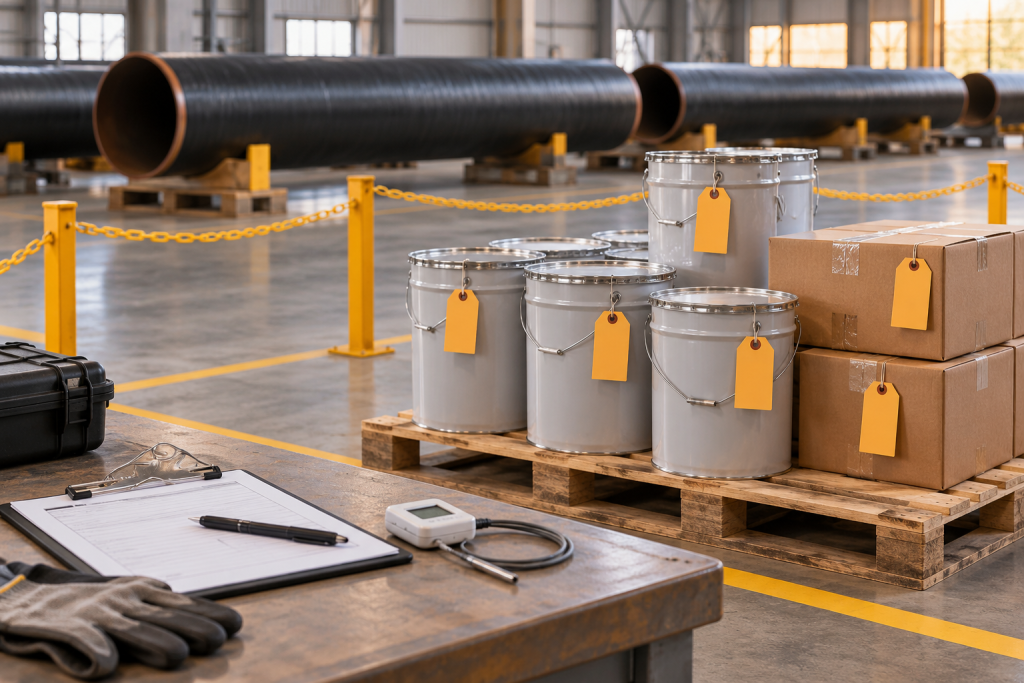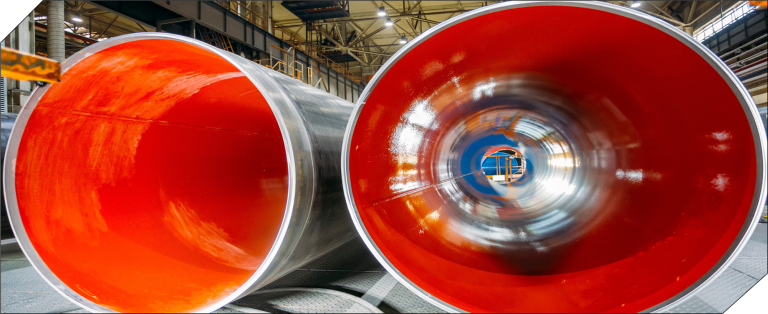
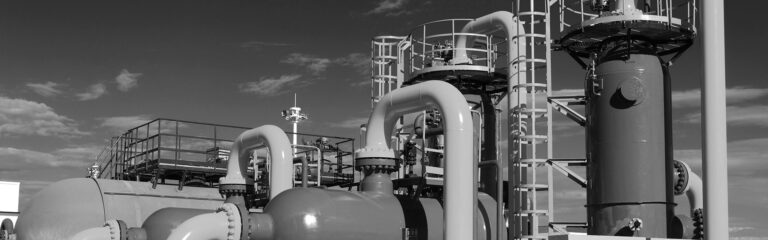

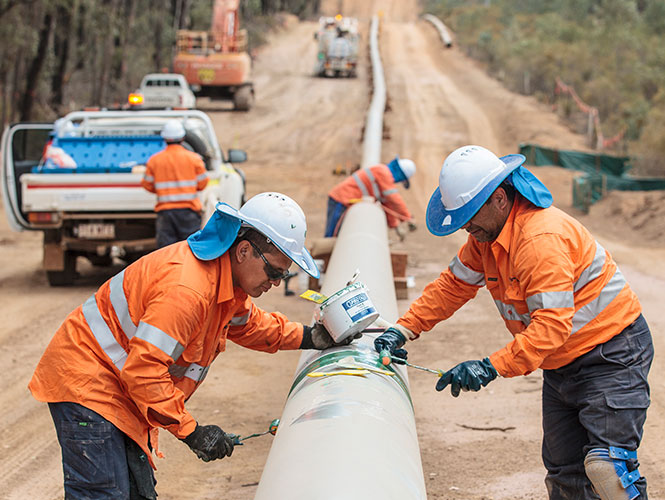

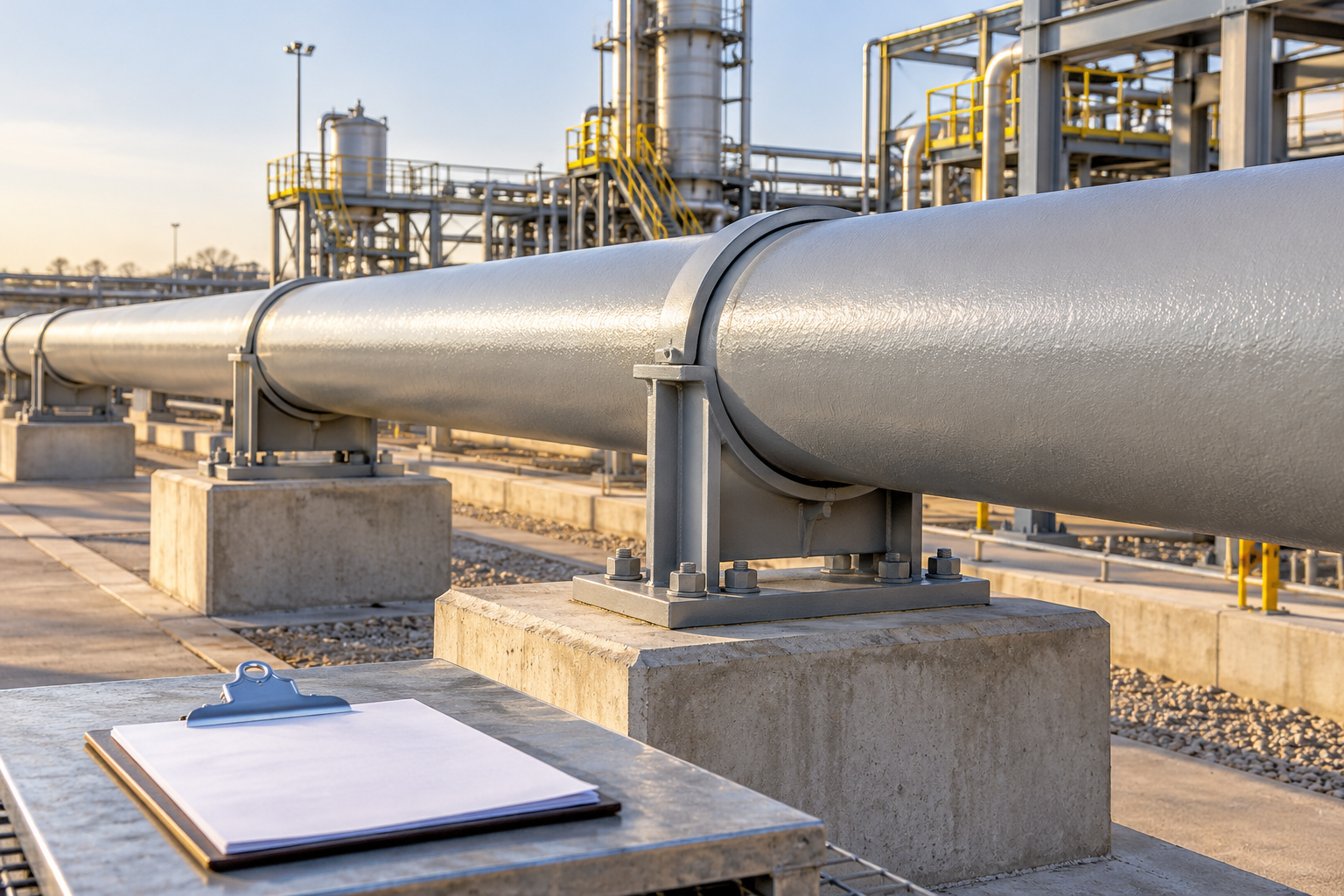
A photograph of an accessible straight pipe run can be useful, but it leaves an important question unanswered: what happened at the locations that were harder to inspect? Supports, penetrations and changes between buried and exposed pipe deserve their own place in an aboveground coating inspection plan.
For an operator's team, the practical objective is to make inspection coverage explicit. A report should distinguish what was examined, what could not be examined and what follow-up is needed. This researched planning guide is not a field work instruction or a project-specific compliance determination.
Define which requirements apply
For pipelines subject to U.S. hazardous-liquid pipeline requirements, 49 CFR 195.583 calls for atmospheric-corrosion inspection and identifies locations needing particular attention. These include soil-to-air interfaces, areas under insulation or disbonded coatings, pipe supports, splash zones, deck penetrations and spans over water. Applicability, inspection frequency and any additional obligations must be established by the operator for the actual asset. 49 CFR 195.583.
Do not copy a schedule from a gas-pipeline article into a hazardous-liquid procedure, or assume that every industrial pipe is regulated under the same part. Begin the work package with the asset identification, service, jurisdiction and governing procedure. Those details help a reviewer understand why a particular scope was selected.
Turn the route into inspectable locations
A useful planning sheet divides the route into identifiable features, not only lengths of pipe. Give each support, penetration and transition a location reference that can be found again. Existing station drawings or asset identifiers may supply a better reference than a newly invented naming scheme.
For each feature, provide space for an overview image, close observations, the accessible extent and any limitation. A support location might have one visible side and another surface hidden from the current viewing position. Recording that distinction avoids turning an incomplete view into an apparent all-clear.
This is an editorially proposed documentation method, not an additional regulatory checklist. Adapt it to the operator's inspection procedure and records system instead of maintaining a disconnected spreadsheet that nobody owns.
Keep coating observations separate from integrity conclusions
Describe observable conditions precisely. “Coating edge lifted on the visible west side” conveys more than “bad paint.” It also says less than “pipe safe,” which requires a different basis. Use the operator's terminology, document the extent that can actually be observed and route findings to the personnel authorized to assess them.
The rule on atmospheric protection requires suitable coating material and includes specific conditions for its exception. It excludes offshore splash zones and soil-to-air interfaces from that exception. A casual description such as “only surface rust” should not be treated as a substitute for the required determination. 49 CFR 195.581.
An inspection record can link the observation to the subsequent assessment without pretending they are the same event. Preserve the initial evidence, identify who reviewed it and record the authorized disposition separately.
Make restricted access visible in the work package
If a required location cannot be adequately examined, record the limitation and assign follow-up under the operator's procedure. Avoid a blank checkbox that could later be interpreted as completed work. A location marked “not examined” with an owner and next step is more informative than an unsupported satisfactory rating.
Do not move a support, remove insulation, disturb a protective jacket or access a hazardous location merely to improve a photograph. Those actions require the applicable engineering, operational and safety controls. The inspection plan should identify who arranges any additional access and who authorizes the work; this article supplies no method for doing it.
Do not use cathodic-protection results as an atmospheric-coating verdict
PHMSA describes cathodic protection as a method used against external corrosion on buried or submerged metallic pipe. Its fact sheet expressly distinguishes that use from atmospheric corrosion and corrosion inside the pipe. A reassuring result from a separate corrosion-control activity therefore should not erase an aboveground coating observation. PHMSA cathodic-protection fact sheet.
Keep the relevant systems connected in the asset record, but state what each observation actually addresses. That makes it easier for an integrity reviewer to identify a missing assessment rather than infer that one test covered every exposure.
Close the record with an accountable next step
At closeout, reconcile the planned locations against completed observations. List unresolved access restrictions, findings awaiting assessment and authorized work still pending. Connect each item to its owner and the procedure controlling its resolution.
For completed work, retain the final disposition and supporting inspection evidence in the established asset record. Avoid declaring the entire route satisfactory solely because a coating repair has been photographed. The useful outcome is a traceable chain from planned coverage to observation, review and disposition, with no hidden gaps at the places that were inconvenient to reach.