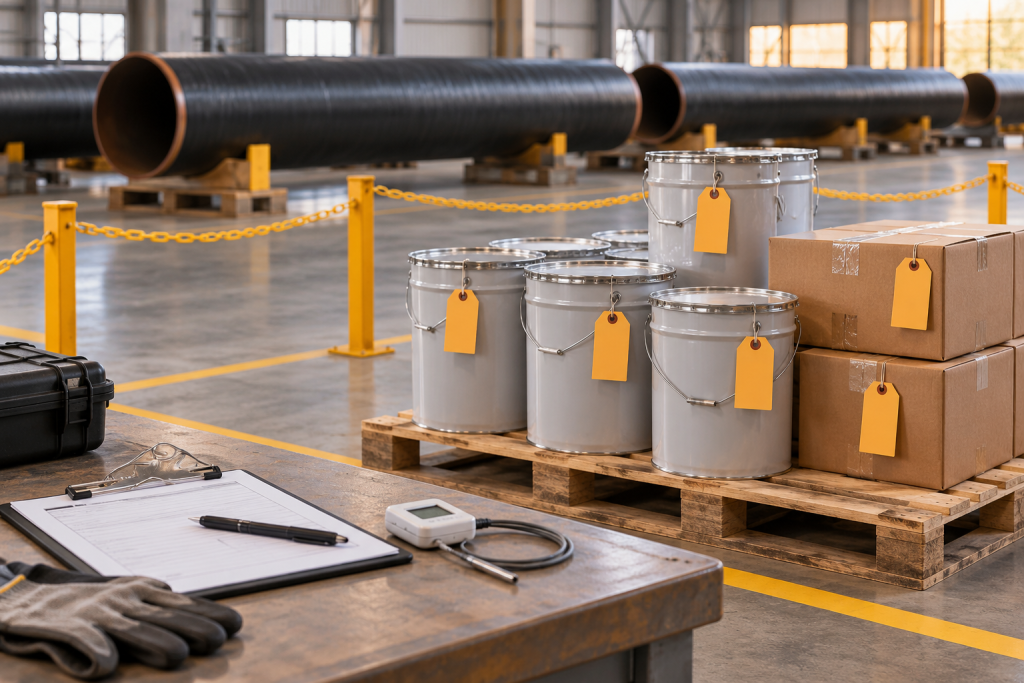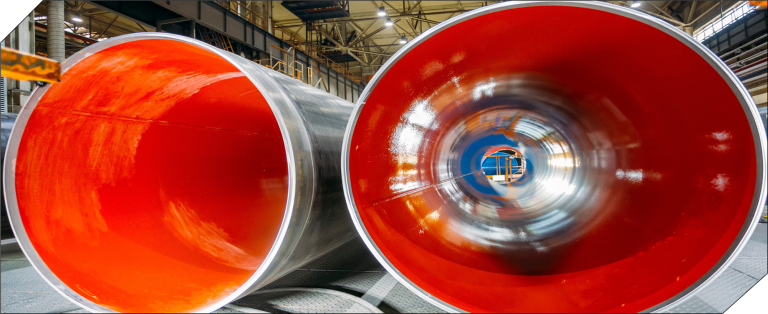





A coated pipe section can look finished while its next permitted operation is still unclear. “Dry” might mean that the surface can be touched, that the coating can tolerate handling, or that a particular inspection can begin. Those descriptions answer different questions. A release plan should name the operation instead of recording a single unexplained cure time.
This is especially useful when a field joint, repair or rehabilitation coating must fit a moving construction schedule. The objective is to make each decision traceable to the exact product and approved procedure, without treating appearance or elapsed time as blanket permission to move ahead.
Read the milestone, not just the number
Manufacturers may publish separate touch-dry, handling and recoat information. For example, the Polyclad 975 H product data sheet distinguishes those schedule entries and separately describes a backfill-readiness condition. This illustrates the need to read the full product-specific instructions; it does not make that product’s times or readiness check suitable for another coating.
ASTM D1640/D1640M-14(2022) addresses stages and rates of drying and film formation under defined conditions, including assessment in the shop and field. Its public guidance also explains that temperature and humidity can affect different coatings differently. A result needs its method and conditions, not just a description such as “fast cure.”
Build a release map before application
Use the approved coating procedure to complete a short map for the work. The entries below are planning questions, not substitute acceptance criteria.
| Next operation | Question to resolve |
|---|---|
| Handling or contact | What product-specific condition must be met before the planned supports, restraints or handling equipment contact the coating? |
| Coating inspection | When may each specified inspection be performed, and what preparation, equipment settings or conditioning does its approved method require? |
| Overcoating or repair | What minimum and maximum interval applies, and what approved action is required if the surface is outside that interval or has become contaminated? |
| Lowering and backfill | What coating condition, completed inspections and release records are required before the installation operation proceeds? |
| Service exposure | Are there additional requirements before the coating encounters the intended temperature, water or chemical environment? |
Name who can authorize each release. If the manufacturer’s documents do not clearly address the planned operation, obtain a written clarification through the project’s technical review process. Avoid filling the gap with a time borrowed from a similar product.
Keep the application and conditions together
Connect each coated location to its application completion time, product identity and component batches. Keep the environmental and substrate-temperature records required by the procedure with that location. A shift-start reading alone may leave a reviewer unable to explain conditions during a later application or overnight cure.
For planning, record an expected inspection time separately from an actual release. If weather, an interruption or a recorded excursion changes the basis of the plan, keep the work’s status clear while the designated reviewer determines the next step. Do not invent a temperature-conversion factor to shorten the wait.
Likewise, do not add accelerator, alter the mix ratio or introduce heating merely to recover the schedule. Any change needs the product manufacturer’s instructions and the project’s approved process. This article does not provide a heating procedure or a field cure test.
Treat a late repair as its own release item
A small repair made after the main coating has cured should remain identifiable. Record its location, product, completion time and required reinspection. Closing the larger area does not answer whether a later repair has met its own requirements.
A useful status list can distinguish “awaiting cure assessment,” “ready for specified inspection,” “inspection complete” and “released for the named operation.” Use the project’s terminology and controls rather than introducing a parallel system the crew cannot see.
Keep the final coating inspection in the sequence
For external pipe coating covered by the relevant U.S. Part 195 provisions, 49 CFR 195.561 requires inspection just before lowering into the ditch or submerging and repair of discovered coating damage. An earlier cure-related check does not replace that checkpoint. Confirm which requirements apply to the particular pipeline.
Before release, the record should answer three practical questions: which location is being released, for which operation, and on what evidence? That is a more useful handoff than a note saying only “dry.”
Technical references checked October 27, 2026. Follow the approved project specification, application procedure and current instructions for the exact coating system.
Before choosing the coating system, use the service-condition worksheet to record the planned handling, installation and exposure demands that the release plan must address.