Career Spotlight: Becoming a Certified Pipeline Coating Inspector
The demand for qualified pipeline coating inspectors has grown steadily as pipeline operators, regulators, and insurers place greater emphasis on documented coating quality assurance. A career as a coating inspector offers strong compensation, international opportunities, and the satisfaction of contributing directly to infrastructure safety.
NACE/AMPP Coating Inspector Certifications
The Association for Materials Protection and Performance (AMPP, formerly NACE International) administers the most widely recognized coating inspection certification program globally. The Coating Inspector Program (CIP) has three levels: CIP Level 1 (entry), CIP Level 2 (experienced), and CIP Peer Review (expert). Each level requires training courses, written examinations, and documented field experience hours.
What Coating Inspectors Do
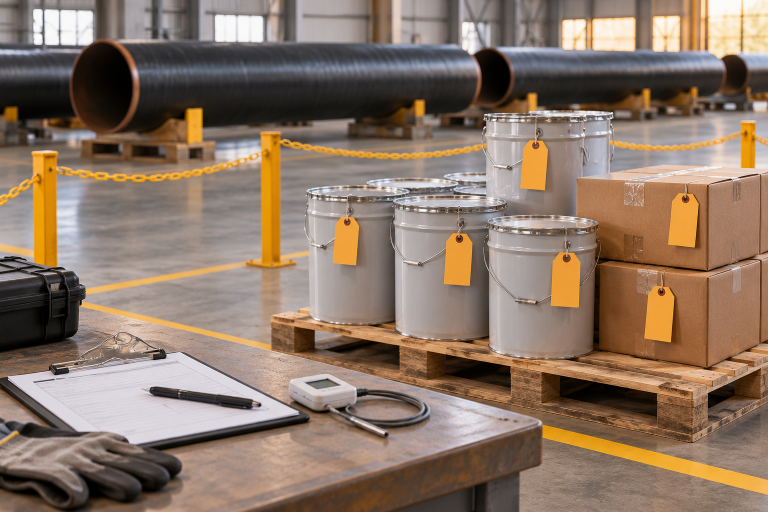
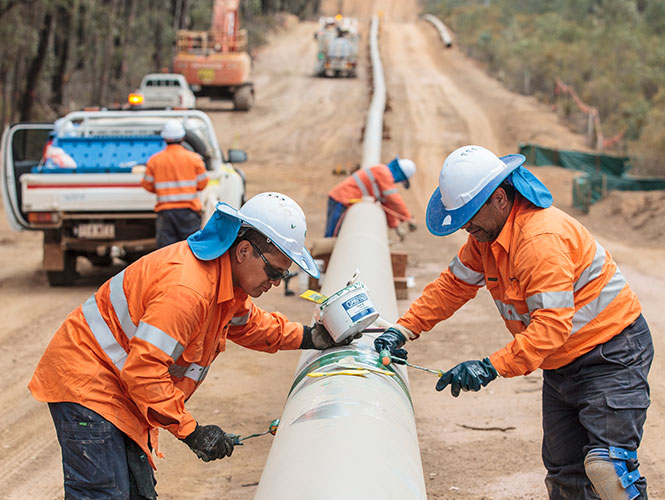
Pipeline coating inspectors verify that surface preparation meets specification, coating materials are properly stored and mixed, application conditions (temperature, humidity, dew point) are within limits, film thickness is achieved, and holiday testing is properly performed. They document their findings in detailed inspection reports that become part of the pipeline’s permanent quality record.
Salary and Career Outlook
Experienced pipeline coating inspectors typically earn $75,000–$120,000 annually in North America, with senior project inspector roles reaching $140,000+. International assignments on major pipeline projects can command significant per diem premiums. The career outlook is strong, driven by aging infrastructure rehabilitation programs and expanding pipeline capacity in developing economies.
Join our Professional Development Working Group for mentorship opportunities, exam study resources, and a network of experienced inspectors ready to support your certification journey. Check our upcoming training events for AMPP CIP prep courses in your region.
Environmental Best Practices for Pipeline Coating Application in Sensitive Areas
Pipeline construction and maintenance often occur in or near environmentally sensitive areas — wetlands, riparian zones, protected habitats, and water supply watersheds. Coating application in these environments requires careful planning and execution to prevent chemical contamination, minimize habitat disturbance, and comply with environmental permit conditions.
VOC Emissions Management
Many pipeline coating materials historically contained significant levels of volatile organic compounds (VOCs) that contribute to air quality degradation. Modern high-solids and 100% solids polyurea formulations have virtually eliminated VOC emissions from the coating application process, providing both environmental benefits and improved worker health outcomes. Solvent-based primers should be substituted with waterborne or solvent-free alternatives wherever possible.
Spill Prevention During Application
Plural-component spray equipment must be positioned and operated to prevent spills of isocyanate components — hazardous materials requiring secondary containment and spill response procedures. Drip pans, lined work areas, and trained equipment operators are minimum requirements for any application near water bodies or sensitive soils.
Green Certification Programs
Pipeline operators increasingly require environmental certifications from their coating contractors, including ISO 14001 Environmental Management System certification and adherence to environmental best practice guidelines published by organizations such as the Interstate Natural Gas Association of America (INGAA). Our resources section includes environmental compliance templates and contractor qualification questionnaires.
Thermal Spray Coatings for Extreme Temperature Pipeline Applications
Pipelines operating at temperatures above 200°F — including those carrying heavy crude, steam-assisted gravity drainage (SAGD) output, and geothermal fluids — present challenges that conventional organic coating systems cannot reliably address. Thermal spray coatings and high-temperature inorganic coating systems fill this critical gap in the pipeline coating toolkit.
Thermal Spray Technologies
Thermal spray processes including arc spray, flame spray, and high-velocity oxyfuel (HVOF) deposit metallic or ceramic coatings by projecting molten particles onto a prepared substrate. Zinc and aluminum thermal spray coatings provide galvanic protection similar to hot-dip galvanizing, while tungsten carbide HVOF coatings offer exceptional erosion resistance for high-velocity slurry service.
High-Temperature Organic Systems
Modified silicone, phenolic epoxy, and high-solids baked amine coatings extend organic coating service temperatures to 400–600°F for above-grade piping. These systems sacrifice some of the mechanical flexibility of polyurea in exchange for superior temperature resistance, making them complementary technologies rather than direct competitors.
Hybrid Solutions for SAGD Pipelines
SAGD gathering lines present a uniquely challenging environment: high temperature near the wellhead, thermal cycling as production fluctuates, and aggressive soil chemistry in many Canadian oil sands formations. Innovative operators are combining aluminum thermal spray for temperature resistance with polyurea topcoats for environmental sealing, creating hybrid systems that perform exceptionally well across the full operating envelope.
Meeting Recap: Spring Pipeline Coatings Summit Highlights and Key Takeaways
The Spring Pipeline Coatings Summit brought together over 340 industry professionals from 28 countries for three days of technical sessions, panel discussions, and networking at the George R. Brown Convention Center in Houston. The event set a new attendance record and generated significant discussion around emerging coating technologies and evolving regulatory requirements.
Day One: Advances in Spray Polyurea Technology
The opening keynote by Dr. Sarah Whitfield of the Pipeline Research Council International (PRCI) provided a comprehensive review of five-year field performance data on spray polyurea coatings across 23 pipeline systems. Key findings included average service lives exceeding initial design life by 15 years and cathodic disbondment rates 60% lower than comparable epoxy systems under identical CP conditions.
Day Two: Regulatory Update Session
The day two regulatory panel featured representatives from PHMSA, Transport Canada, and the EU Pipeline Safety Coordination Group. Discussion centered on the pending PHMSA coating standards update and its implications for operators running legacy coating systems on aging infrastructure. Panelists emphasized the 2–3 year lead time needed for operators to qualify new coating systems before regulatory deadlines.
Day Three: Workshops and Networking
The final day featured hands-on workshops on plural-component spray equipment maintenance, holiday testing procedures, and cathodic protection troubleshooting. The evening networking dinner drew the largest turnout in the event’s history, with strong interest in the organization’s new regional chapter program.
All presentation materials from the Summit are available to members in our resources library. Registration for the Fall Technical Conference is now open.
High-Density Polyethylene (HDPE) vs Polyurea: Choosing the Right Pipeline Coating
Two of the most widely discussed coating and lining options for new pipeline construction are high-density polyethylene (HDPE) outer wrap/sleeve systems and spray-applied polyurea coatings. Each has a dedicated following in the industry, and the optimal choice depends heavily on application environment, installation method, and lifecycle cost objectives.
HDPE Coating Systems
Factory-applied HDPE coatings — typically three-layer systems with an FBE primer, adhesive, and HDPE topcoat — provide exceptional mechanical protection during installation, particularly for directional drilling and rocky trench conditions. The HDPE layer’s abrasion resistance is unmatched by any spray-applied alternative at standard thicknesses.
Spray Polyurea Advantages
Spray polyurea’s advantages emerge most clearly in field joint coating, irregular geometries, and rehabilitation scenarios. A skilled applicator can coat a 40-inch diameter field joint in under 10 minutes, achieving uniform thickness over the weld bead and adjacent areas that factory-applied wraps cannot access. Polyurea also offers superior elongation, accommodating soil movement and thermal cycling without cracking or delamination.
A Hybrid Approach
Many experienced pipeline engineers specify a hybrid approach: factory-applied three-layer polyethylene for mainline pipe with spray polyurea for all field joints and special sections. This combination leverages the manufacturing efficiency of factory coating with the field adaptability of polyurea, delivering the best performance profile at a competitive lifecycle cost.
For more technical comparisons, visit our technical library or join the discussion in our Materials and Coatings Working Group.
Internal Pipeline Liners: Protecting Flow Efficiency and Structural Integrity
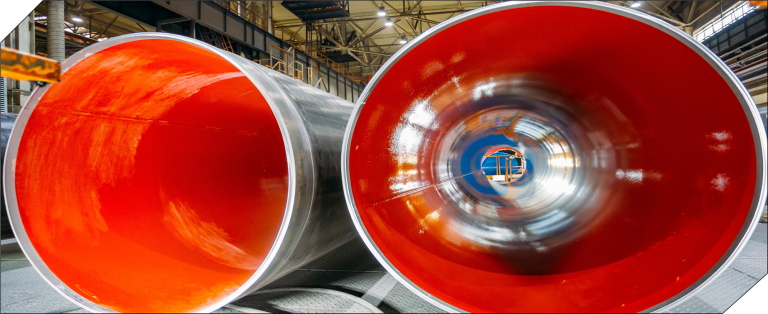
Internal pipeline liners serve a dual purpose: they protect the pipe wall from chemical attack and erosion by transported fluids, and they reduce surface roughness to improve flow efficiency. In the oil and gas industry, even a modest improvement in flow coefficient translates to millions of dollars in pumping energy savings across a large network.
Types of Internal Liners
The primary categories of internal pipeline lining systems include spray-applied liquid coatings, cured-in-place pipe (CIPP) liners, and mechanical slip liners. Each is suited to different pipe diameters, operating conditions, and rehabilitation scenarios.
Spray-Applied Internal Coatings
For large-diameter pipelines (typically 12 inches and above), robotic spray systems apply polyurea or epoxy liners from the interior, achieving consistent film thickness across complex geometries including bends and T-connections. Modern robotic applicators can line up to 1,500 feet of pipe per day with laser-guided thickness monitoring.
Drag Reduction Liners
Specialized smooth-surface epoxy liners reduce the Manning roughness coefficient of steel pipe from 0.013 to as low as 0.009, delivering flow efficiency improvements of 15–25% compared to unlined corroded pipe. When combined with external polyurea protection, a fully lined pipeline represents the gold standard in long-term asset management.
Quality Control and Inspection
Internal coating quality is verified through CCTV inspection, laser profilometry, and random coupon pull tests. AWWA C210 and API 5L provide the foundational standards for internal lining of steel pipelines. Our resources library includes detailed QC procedure guides for internal application projects.