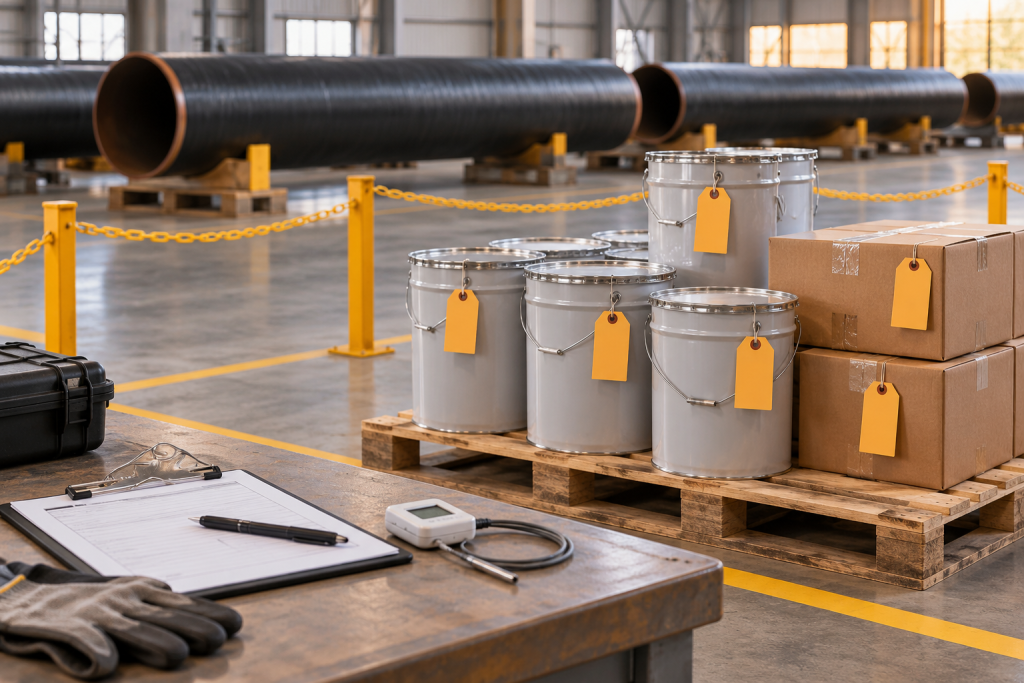



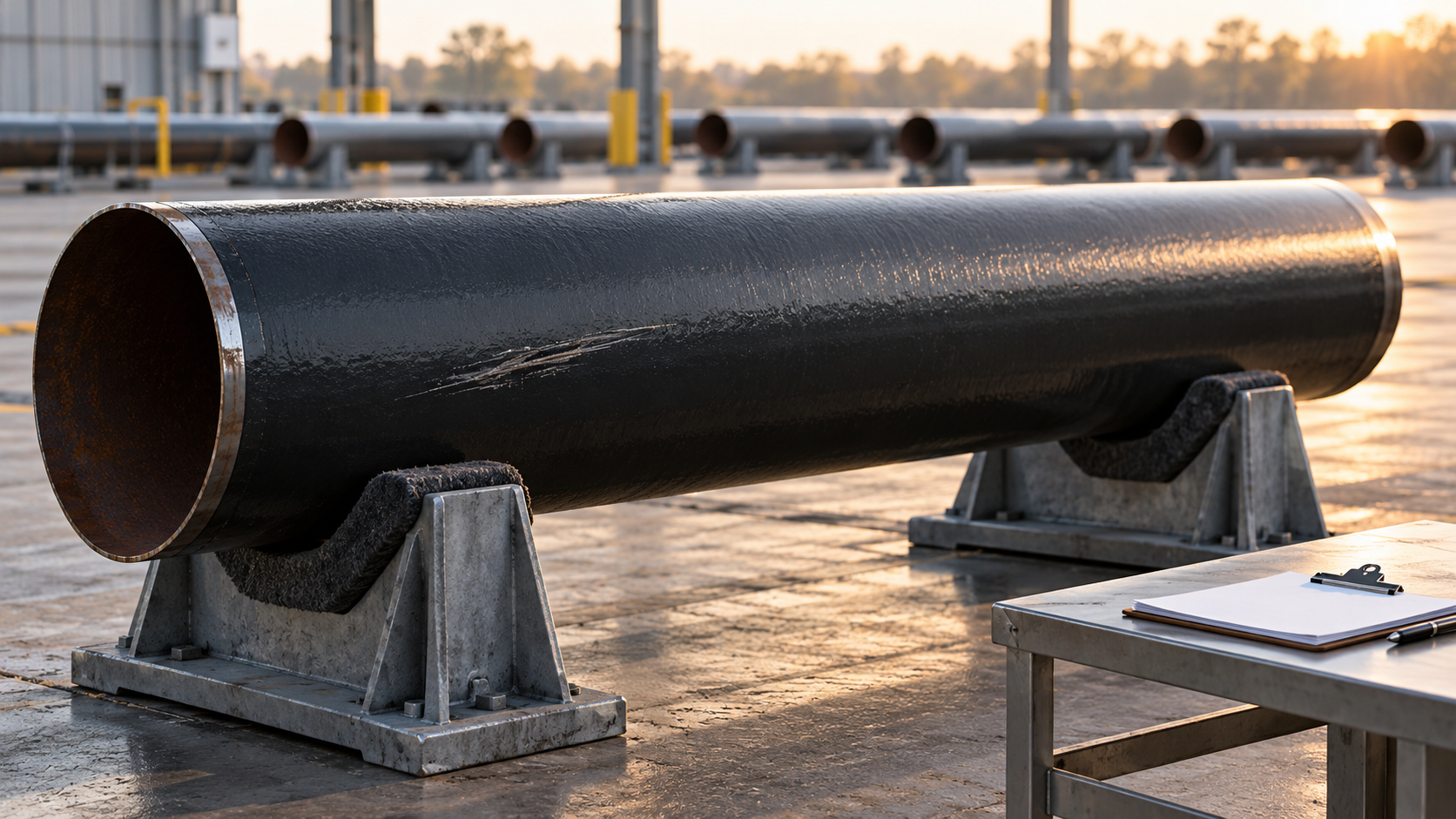
Coated pipe can pass a factory inspection and still arrive at the installation area with damage. Transport restraints, unloading, storage and later moves create additional opportunities for a coating to be marked or damaged. A receiving check is therefore useful early in the job, while the delivery and affected pipe can still be identified.
The objective is to recognize concerns, prevent questionable material from moving forward unnoticed and route decisions to qualified personnel. This is a coordination checklist, not a rigging plan, coating-repair specification or substitute for the operator’s inspection procedures.
Separate receiving from installation acceptance
For pipeline construction subject to the relevant U.S. Part 195 requirements, 49 CFR 195.206 requires visual inspection of pipe and other components at the installation site for damage that could impair strength or serviceability. Signing a delivery receipt does not complete that later responsibility.
There is also a specific coating checkpoint. Section 195.561 requires inspection of the external coating covered by section 195.557 just before the pipe is lowered into the ditch or submerged, with discovered coating damage repaired. Schedule receiving, intermediate checks required by the project, and this final checkpoint as identifiable events.
Confirm the requirements that apply to the particular pipeline. These provisions should not be presented as a universal inspection rule for every type of pipe or facility.
Prepare the receiving decision before the truck arrives
Have the purchase documents, approved coating system and supplier’s handling instructions available to the receiving team. Agree how pipe identifiers will connect the physical delivery with its paperwork. The team also needs a clear way to distinguish material awaiting evaluation from material released for the next operation.
A practical receiving record can capture:
- Delivery date, shipment reference and receiving location
- Pipe identifiers and the coating system stated in the delivery documents
- Visible concerns, with photographs tied to each affected identifier
- Any areas that could not be inspected safely at that stage
- The person notified and the current disposition of the affected material
Record missing information as missing. A delivery quantity that matches the order does not resolve an uncertain coating identity or an unreadable pipe marking.
Look for changes that need qualified assessment
Within the approved inspection arrangement, record visible cuts, scraped areas, cracking, loose coating edges, exposed metal and unusual marks at support or restraint locations. Describe what is visible without deciding from a photograph alone how deep the damage extends. A useful photograph includes enough surrounding detail to locate the mark as well as a closer view.
Damage to the steel needs its own evaluation. A suspected dent, gouge or distorted end should not be treated as a coating-only problem simply because a repair material could cover it. Refer uncertain conditions to the operator’s designated inspection or engineering personnel before the pipe proceeds.
Inspection access must be planned with the handling crew. Nobody should climb an unstable stack, reach between unsecured pipe or stand beneath a suspended load to complete a checklist. If the underside is inaccessible, record that limitation and arrange safe access through the approved handling plan.
Protect the coating during storage and subsequent moves
The receiving conversation should include how the pipe will be supported, separated, lifted and moved next. Obtain the supplier’s requirements for the actual coating system, including any storage-duration or environmental restrictions. Do not choose stack heights, support spacing or lifting methods from a general coating article.
49 CFR 195.559 includes resistance to handling damage and soil stress among the requirements for the external corrosion-control coating within its scope. That material requirement does not establish that a particular delivered pipe section has remained undamaged through every move.
Ask the project team to identify when another condition check is required, such as after a reported impact or an unplanned move. Make it easy for the handling crew to report an event without having to decide whether the damage will eventually be acceptable. Keep the affected pipe’s status visible until that question is resolved.
Agree who can inspect, repair and release
Section 195.204 requires operator personnel performing construction inspection to be trained and qualified for the phase inspected. It also prevents an operator employee from performing the required inspection of a construction task that employee carried out. Assign responsibilities accordingly where the provision applies.
For a coating concern, obtain the approved disposition and repair procedure for the identified system. The project should establish the materials, preparation, application conditions, cure and reinspection requirements. Avoid accepting an improvised touch-up because its color resembles the surrounding coating.
Keep original findings connected to the repair and subsequent acceptance record. If work remains open, identify the next required action and the person responsible. The site’s pipeline coating handover guide explains how those records can remain usable after construction.
Carry the condition history to the final checkpoint
Before installation, reconcile the actual pipe identifiers with open receiving concerns, handling-event reports and completed repairs. Confirm that the required final inspection can occur at the correct time with safe access. Earlier photographs help explain the history, but they cannot show damage that happened after they were taken.
A useful receiving process gives the next crew a clear starting point: what arrived, what needs attention and what has been released. Preserving that information through storage and handling helps the final inspection address the pipe in front of the inspector.