Choosing a pipeline coating system usually comes down to three broad categories: fusion bonded epoxy, tape wrap systems, and spray-applied coatings. Each has a long track record in the industry, and each fits a different mix of project conditions, from mainline new construction to field joint repair to rehabilitation work on aging infrastructure.

This guide compares the three at a practical level, covering how each is applied, where it tends to perform well, and what tradeoffs come with it, so the choice can be based on project conditions rather than whichever option a given contractor happens to default to.

Pipeline Coating Systems Compared: Understanding the Basics 

All three coating categories exist to do the same core job: create a barrier between the pipe’s steel surface and the surrounding soil, water, or atmosphere, reducing corrosion risk and extending service life. How they achieve that barrier, and where in the pipeline lifecycle they’re typically applied, is what separates them.

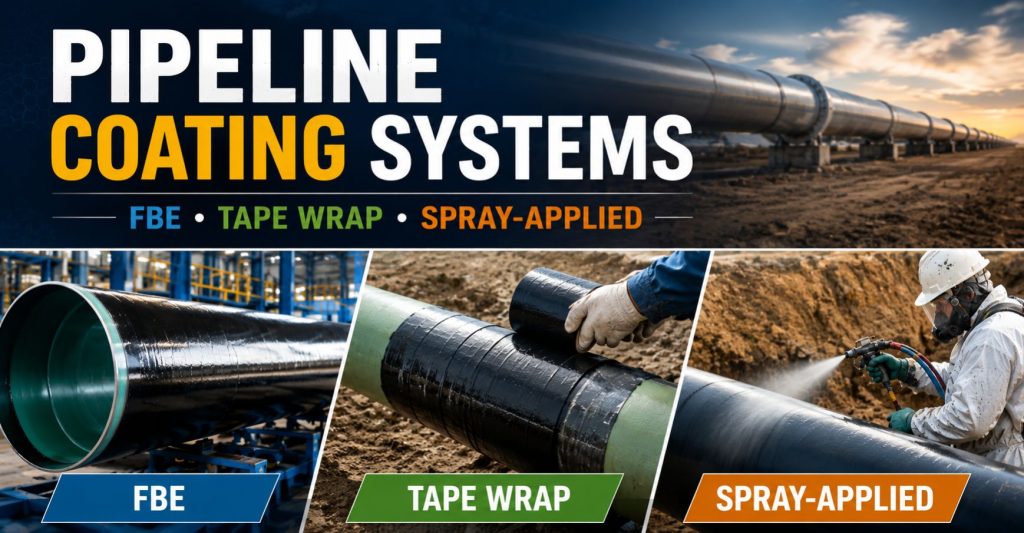
Fusion bonded epoxy (FBE) is a factory-applied, heat-cured thin-film coating, most commonly used on new mainline pipe before it ever reaches the field. Tape wrap systems, whether cold-applied or hot-applied, are mechanically wrapped around the pipe, often used for field joints, older infrastructure, and situations where factory coating isn’t practical. Spray-applied coatings, a category that includes various epoxy, polyurethane, and polyurea-type systems, are applied wet in the field or in a controlled setting, curing into a bonded film.

Fusion Bonded Epoxy (FBE)

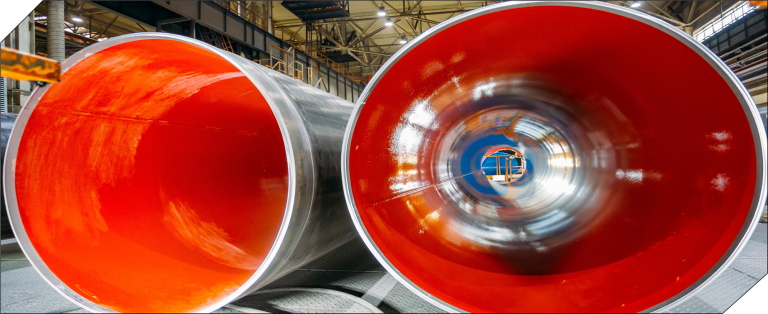
FBE has been a mainstay of new pipeline construction for decades, largely because it’s applied under controlled factory conditions rather than in the field, which supports consistent quality control. The pipe is heated, and epoxy powder is applied and cured onto the surface, producing a relatively thin, hard film.

FBE performs well as a primary barrier coating on buried mainline pipe, but it has known limitations. It’s more brittle than a flexible coating and can be more vulnerable to mechanical damage during transport, handling, and installation, particularly at bends, dents, or gouges. It’s also not typically suited to UV exposure over long periods, which is part of why FBE-coated sections are usually buried or otherwise shielded rather than left exposed above grade for extended periods.

Tape Wrap Systems

Tape wrap coatings, whether cold-applied petrolatum or wax-based tapes or hot-applied systems, have a long history in pipeline protection, especially for field joints where factory-applied coatings can’t reach and for older pipeline systems that predate widespread FBE adoption. Application involves wrapping the tape around the pipe surface, typically with an inner primer layer and an outer mechanical protection layer.

Tape systems are valued for field-friendliness. They don’t require the equipment or cure time that spray-applied systems do, which makes them practical for remote locations or smaller repair jobs. The tradeoff is a greater long-term risk of disbondment or tenting, where the tape separates from the pipe surface over time, particularly under soil stress or with inconsistent original application. Inspection and maintenance planning tend to matter more with tape systems than with a bonded coating.

Spray-Applied Coatings

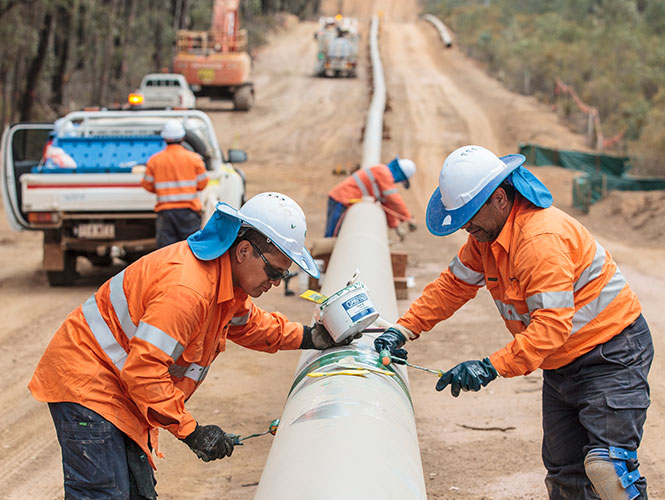
Spray-applied systems cover a range of chemistries, but they share a common advantage: they can be applied directly onto a prepared surface in the field, at a repair site, or in a controlled shop setting, curing into a continuous, bonded film without the seams or overlap points that tape systems have.

This category is commonly used for field joint coating, connecting the factory-coated sections of pipe once they’re welded together in the field, as well as for rehabilitation of existing pipeline sections and for high-impact or high-abrasion areas where a flexible coating is preferred over a more rigid one. Spray-applied systems generally offer good flexibility and can accommodate a wider range of surface conditions than factory-only options, though surface preparation quality has an outsized effect on how well any spray-applied coating actually performs.

Comparison Table

SystemApplication MethodTypical UseKey AdvantageKey Limitation
Fusion Bonded Epoxy (FBE)Factory-applied, heat-curedNew mainline constructionConsistent factory quality controlMore brittle, vulnerable to mechanical damage
Tape Wrap (cold or hot-applied)Field-wrapped mechanicallyField joints, older infrastructure, remote repairsNo specialized equipment or cure time neededHigher long-term disbondment risk if not properly applied
Spray-Applied (epoxy, polyurethane, polyurea-type)Field or shop-applied, sprayed and curedField joints, rehab, high-impact areasSeamless, bonded, generally flexiblePerformance depends heavily on surface prep quality

Which System Fits Which Job

FBE tends to fit:

  • New mainline pipe manufactured and coated under factory conditions
  • Projects prioritizing consistent, quality-controlled coating application
  • Buried service where UV exposure isn’t a factor

Tape wrap tends to fit:

  • Field joint protection where factory coating can’t reach
  • Remote sites without access to spray equipment
  • Repair or rehabilitation of older systems already using tape-based protection

Spray-applied systems tend to fit:

  • Field joints connecting factory-coated pipe sections
  • Rehabilitation projects on aging or damaged pipeline
  • High-impact, high-abrasion, or ground-movement-prone areas where flexibility matters

For a closer look at how spray-applied systems compare specifically against another common option, see our comparison of HDPE versus polyurea pipeline coatings.

Things to Consider Before Choosing a System

  1. Is this new mainline construction, a field joint, or a rehabilitation project? Each scenario tends to favor a different coating category.
  2. What’s the realistic surface preparation standard achievable on this job, since that affects spray-applied and tape performance more than FBE?
  3. What’s the soil condition and expected mechanical stress at the coating location?
  4. Does the project need to meet a specific regulatory or client specification that names a particular coating category?
  5. What inspection and maintenance access will be available after installation, particularly relevant for tape systems?

Surface preparation deserves particular attention regardless of which system is chosen, since a large share of coating failures across all three categories trace back to inadequate prep rather than the coating material itself. Our guide on properly preparing a pipeline surface before coating covers the standards and practical steps involved.

Maintenance and Long-Term Performance

Each coating category has a different maintenance profile. FBE, once properly applied and buried, generally requires little ongoing attention barring mechanical damage or excavation-related exposure. Tape systems benefit from periodic inspection where accessible, since disbondment can develop gradually and isn’t always visible from the surface. Spray-applied coatings hold up well over time when application and surface prep were done correctly, with most long-term issues tracing back to installation quality rather than the coating chemistry itself.

Regardless of coating type, corrosion risk doesn’t disappear the moment a coating is applied. Our broader guide on pipeline corrosion prevention covers how coating selection fits into a full corrosion management strategy alongside cathodic protection and inspection practices.

Frequently Asked Questions

Which pipeline coating type is most commonly used?

FBE has historically been the dominant choice for new mainline construction due to its factory-controlled application process, while tape wrap and spray-applied systems see heavy use for field joints, repairs, and rehabilitation work.

Can different coating types be used on the same pipeline?

Yes, and it’s common. A pipeline might use FBE on the mainline sections and a spray-applied or tape system at field joints, since those joints can’t be factory-coated before installation.

Which coating type holds up best against mechanical damage?

Flexible spray-applied systems generally offer better resistance to impact and ground movement than more rigid coatings like FBE, though actual performance depends on the specific formulation and application quality.

Do all these coating types require the same surface preparation?

No. Requirements vary by system and by the applicable industry standard for the project, but inadequate surface preparation is a leading cause of coating failure across every category, so it shouldn’t be treated as a minor step regardless of which coating is chosen.

How do regulators view these different coating types?

Pipeline coating selection generally needs to align with applicable federal and industry standards for the specific project and jurisdiction. Confirming current requirements with the relevant regulatory body before specifying a coating system is standard practice.

Conclusion

FBE, tape wrap, and spray-applied coatings each solve the same underlying problem in different ways, and the right choice depends heavily on where in a pipeline’s lifecycle the coating is being applied and what conditions it needs to withstand. New mainline construction, field joints, and rehabilitation work each tend to favor a different system, and in many real projects, more than one coating type ends up working together across the same pipeline. Surface preparation quality remains the common thread that determines whether any of these systems performs as expected over the long term.

Read More