
Ask a coatings crew about pipeline pigging and you’ll usually get a shrug. Pigs are an operations thing. But pigs and coatings are tied together more closely than most people think. A smart pig run is often what sends a crew out to dig, inspect and recoat a section of line. A cleaning pig is what scrapes across an internal lining day after day. And the launcher and receiver traps where pigs go in and come out are some of the most coating-hungry pieces of steel on the system. This guide explains how pigging works, what the main tool types find, how it affects coating work and what to check when your coating has to live with pigs.
What pipeline pigging is
A “pig” is a device that travels through a pipeline, pushed by the product flow. According to PHMSA’s fact sheet on in-line inspection, the industry has used scrubbing and scraping pigs for many years to clean the inside of lines and reduce build-up of waxes and other contaminants.
In-line inspection (ILI) tools run through the pipe the same way, so they’re called “smart pigs.” Instead of scraping, they measure and record irregularities that may represent corrosion, cracks, laminations, dents, gouges and other defects.
How a run works. PHMSA describes it this way. At a location like a valve or pump station, a special arrangement of pipes and valves lets crews load the tool into a trap, close and seal it, and redirect flow to launch the tool into the main line. Downstream, a similar setup diverts the tool out of the main line into a receiver, where it’s removed and its data is pulled for analysis.
Types of pigs and what they find
| Pig type | What it does | What it finds |
|---|---|---|
| Cleaning (utility) pig | Scrapes and scrubs the pipe wall | Removes wax, paraffin and debris |
| Magnetic flux leakage (MFL) | Applies a magnetic field and senses leakage | Metal loss such as corrosion and gouges |
| Transverse MFL (TFI) | MFL with the field turned 90 degrees | Longitudinal corrosion and seam-related defects |
| Compression wave UT | Times ultrasonic echoes from both pipe surfaces | Wall thickness and metal loss |
| Shear wave UT (C-UT) | Angled ultrasonic pulses through a liquid coupling | Longitudinal cracks, weld defects and stress corrosion cracking |
| Geometry (caliper) | Measures the pipe bore with arms or electro-mechanical sensors | Dents, ovality and other deformations |
All of these come from PHMSA’s descriptions. Two details are worth flagging for coatings people:
- None of these tools measures coating condition directly. They find metal loss, cracks and deformation in the steel. Coating failure shows up indirectly, as external corrosion where the coating has let go.
- UT tools need a clean line. PHMSA notes that removing paraffin build-up is especially important on crude lines, and recommends a cleaning pig before a UT run.
On hazardous liquid lines, PHMSA points out that the repair criteria in 49 CFR 195.452(h) depend on both the depth and orientation of dents, so geometry tools used for dents should report orientation, location and depth for each one. Dents matter to coating crews too, because the coating at a dent is often cracked or disbonded and needs to be assessed at the dig.
PHMSA also says operators need to know the pipe type, thickness and material, the likely defects and the risk of the section when choosing which tool to run.
How pipeline pigging affects coating work
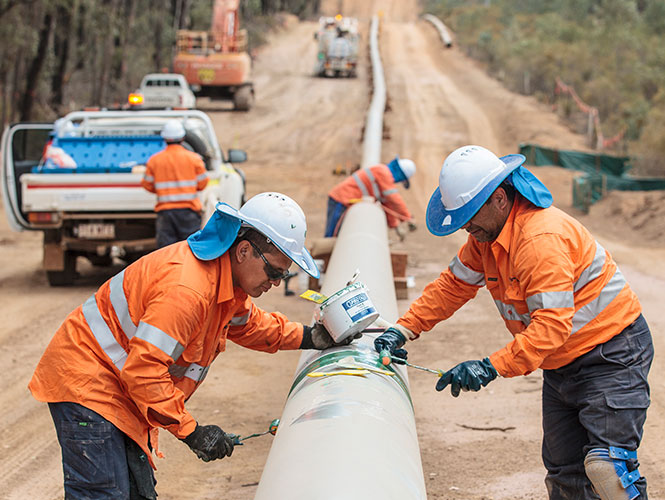
External coatings. When an MFL or UT run finds external metal loss, the usual next step is a dig: expose the pipe, verify the anomaly, assess the coating and repair. That’s where coating crews come in. The coating around the anomaly tells you a lot about why it happened: disbondment, a failed field joint, rock damage or shielding of cathodic protection. Our post on preserving the condition record on exposed pipeline coating covers documenting it before anyone starts grinding.
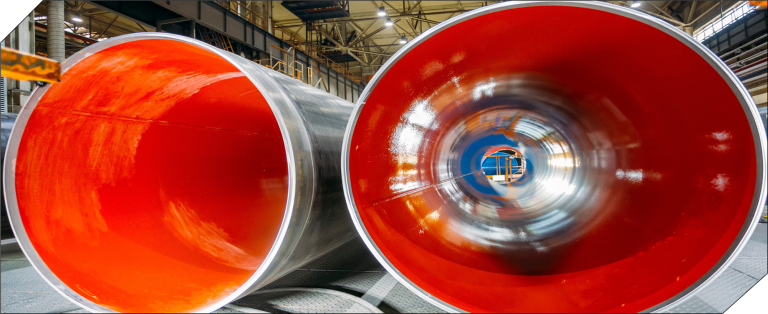
Internal linings. Every cleaning pig drags cups, discs or brushes along the inside of the pipe. An internal lining on a piggable line has to stand up to that. Ask the lining supplier whether the system has been used on piggable lines and what pig types it’s compatible with, and get the operator’s pigging plan before you spec it. More on that in internal pipeline liners and flow efficiency.
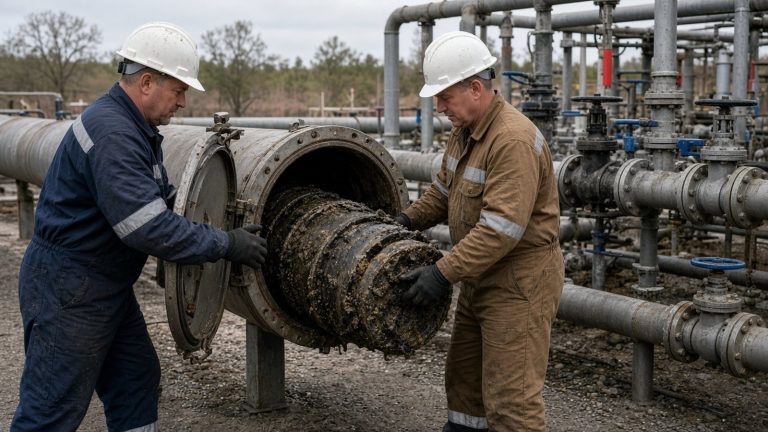
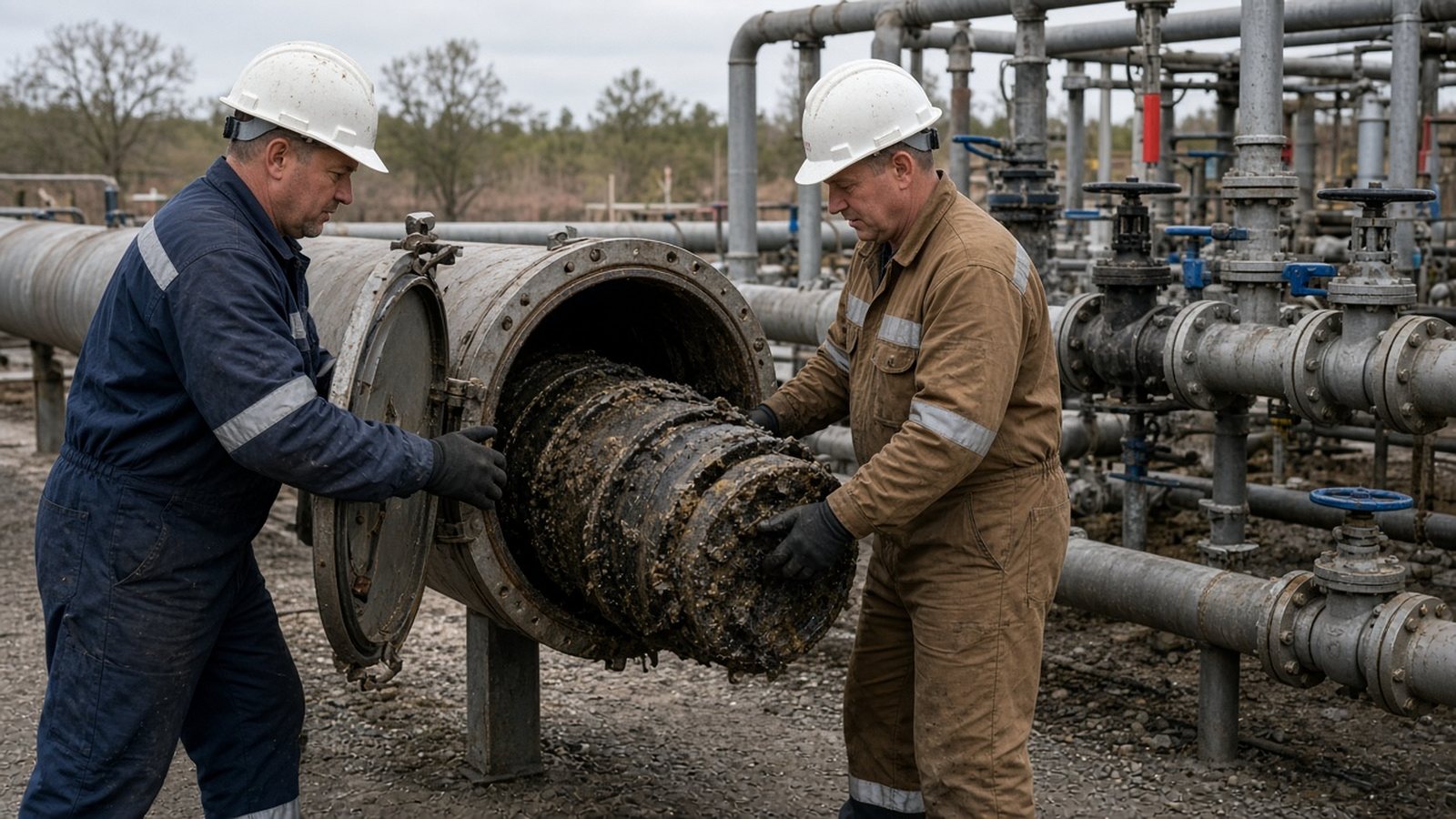
Traps. Launcher and receiver traps get opened, closed, drained and wiped down far more than buried pipe. They see product, water, debris and mechanical abuse. They’re a good place for a high-build, abrasion-resistant coating, and they deserve their own inspection interval.
Pig run time and tool picker
Use this to estimate how long a pig takes between traps and which ILI tool type fits the defect you’re looking for. Run time here is distance divided by speed. Real pig speeds vary with flow, bypass and line conditions, so use your operator’s planned speed.
Pipeline pigging planner
This is a planning aid, not an integrity tool. Tool selection on a regulated line follows the operator’s integrity management plan and the vendor’s specs.
From pig data to a coating repair
When an ILI run calls a dig, the coating scope usually goes like this:
- Locate and expose. The crew digs to the anomaly using the tool’s location data and above-ground markers.
- Document the coating. Photos, holiday testing and adhesion checks before anything is removed.
- Remove coating and assess the steel. The integrity team measures the anomaly and decides on repair.
- Prepare the surface. Blast to the cleanliness and profile the repair coating calls for. See pipeline surface preparation before coating.
- Apply the repair coating. Compatible with the existing coating and the cathodic protection system. Our post on cathodic protection and pipeline coatings explains why that matters.
- Inspect and record. Thickness, holiday test and a handover record so the next ILI run can be compared against it.
If coating failure keeps turning up at the same kinds of locations, that’s a pattern worth chasing. See pipeline coating failures: root cause analysis.
Coating launchers, receivers and pig traps
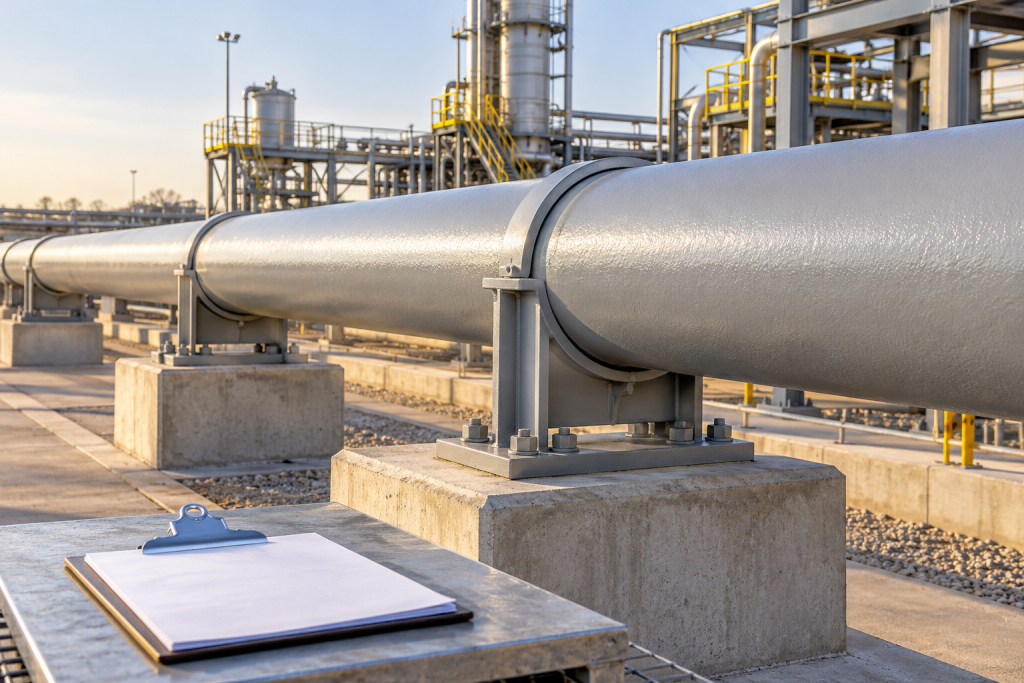
Pig traps take a beating, and they’re often aboveground, so they get sun, rain and spills on top of operational wear.
- Abrasion. Pigs, debris and tools rub the barrel and closure.
- Product and water. Traps are drained every time they’re opened.
- Spills. Opening a trap can release product. At a facility with an SPCC plan, it makes sense to fold trap areas into the same inspection routine you use for tanks and piping. This SPCC inspection checklist is a good reference for the containment side.
- Supports and transitions. Where the trap ties back to buried pipe, coatings change and corrosion likes to start. See aboveground pipeline coatings around supports and transitions.
What pigs are made of
Many cleaning pigs use polyurethane cups, discs or a full polyurethane body, and the hardness of that urethane changes how hard the pig scrubs the wall and how well it seals. Hardness is one of the main things pig makers adjust for a given line, along with cup and disc design. If you’re trying to understand the hardness ratings on a pig spec sheet, this explainer on Shore A vs Shore D hardness lays out the two scales.
For internal linings, ask what pig type and hardness the operator plans to run. A soft foam pig and a steel-mandrel pig with brushes are very different tests.
For the broader corrosion picture on oil pipelines, see our pipeline corrosion prevention guide.
Pipeline pigging checklist for coatings work
☐ Pigging plan reviewed
Tool types, frequency and speeds known.
☐ Internal lining compatible
Supplier confirms performance with the planned pig types.
☐ Cleaning run before UT
Especially on crude lines with paraffin.
☐ Dig coating documented
Photos, holiday test and adhesion before removal.
☐ Repair coating compatible
Works with the existing coating and CP system.
☐ Traps coated and inspected
Abrasion-resistant system and a regular inspection interval.
☐ Records handed over
So the next ILI run can be compared.
Pipeline pigging FAQ
What is pipeline pigging?
Running a device called a pig through a pipeline, pushed by the product flow. Cleaning pigs scrape out wax and debris. Smart pigs, or in-line inspection tools, measure and record defects in the pipe wall.
Why is it called a pig?
The term is widely used for these scraping and scrubbing devices, and PHMSA notes that inspection tools are called smart pigs because they run inside the pipe the same way.
Do smart pigs detect coating damage?
Not directly. MFL and UT tools measure the steel, finding metal loss, wall thickness changes and cracks. External corrosion found by a pig often points to coating failure at that spot.
Why run a cleaning pig before a UT inspection?
UT tools need a clean line to get good readings. PHMSA recommends a cleaning pig before UT tools, especially on crude oil lines with paraffin build-up.
Can internal coatings handle pigging?
Some can and some can’t. Confirm with the lining supplier that the system has been used with the pig types the operator plans to run.